grant

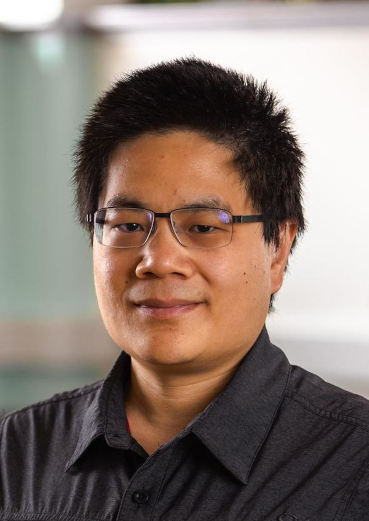
New team member : welcome Pen-Yuan Hsing !

Welcome in team Thanks to an incoming Fellowship provided by the BUA, we are pleased to announce that Pen-Yuan Hsing will join the Open.Make team for the last six months of the project. Pen background If you have been active in the open science communities (especially GOSH, the Turing way book, or TOPS), his name will be very familiar to you. Pen worked with Robert in the OpenNext EU project, and met Julien in Geneva for the [heroes workshop[(REF)].
Continue reading

OpenMake II application: published and funded

OpenMake II It is a pleasure to announce that the Open.Make project has been funded for another 2.5 years. The work will become more practical and local. We are one of three projects that received a second round of funding by the BUA. While you can download the full application on zenodo: doi: 10.5281/zenodo.8220972, here is a very short summary of our plans. During the next nearly three years, we will work, on the one hand, on hardware publication.

Continue reading

Open.Make kickoff meeting.

On October 7th 2021, the Open.Make project kickoff meeting took place at the Charité campus in Mitte. The three research partners/labs, the project officer from the Berlin University Alliance (BUA) and three invited external partners presented and discussed their respective works. It was a successful meeting as it offered a broad overview of the benefits of open hardware in academia and beyond. While it was originally planned as fully in-person, the meeting had to be shifted to a hybrid meeting, as two participants could not come to the meeting location.

Continue reading

Scope of the Open.Make project.

Original post (2021-09-27) has been updated (2023-12-14). The problem(s) Have you ever tried to follow instructions on how to assemble something and get stuck, either due to a lack of clarity or missing information? This can be annoying enough when you are trying to setup a new piece of furniture, but when your goal is to replicate someone’s research1, these annoyances create an additional burden. In the worst case, the research cannot be replicated and the research process is significantly slowed down.

Continue reading

Genesis of the open.make project.

On September 1st the Berlin university alliance project Open.make: toward open and FAIR hardware has officially started. Three labs that work together for the first time will collaborate and design a social and technical infrastructure, in order to foster open and FAIR hardware publication and recognition. In this post, we will describe how the idea was developed over a short period of time following the publication of a BUA call.

Continue reading